
London, Friday 23 October 2026
Sierra Leone’s *Minister of Trade and Industry, Hon. Alpha Ibrahim Sesay*, made a strong case for *greater investment, value addition and fairer global partnerships as the 4th World Coffee Innovation Summit (WCIS26)* concluded in London yesterday.
Speaking on *Day Two* of the Summit at the *Queen Elizabeth II Centre*, Minister Sesay argued that coffee and other *commodity-producing countries must be supported to retain a greater share of the wealth generated from what they produce*, while strengthening climate resilience, research and sustainable production.
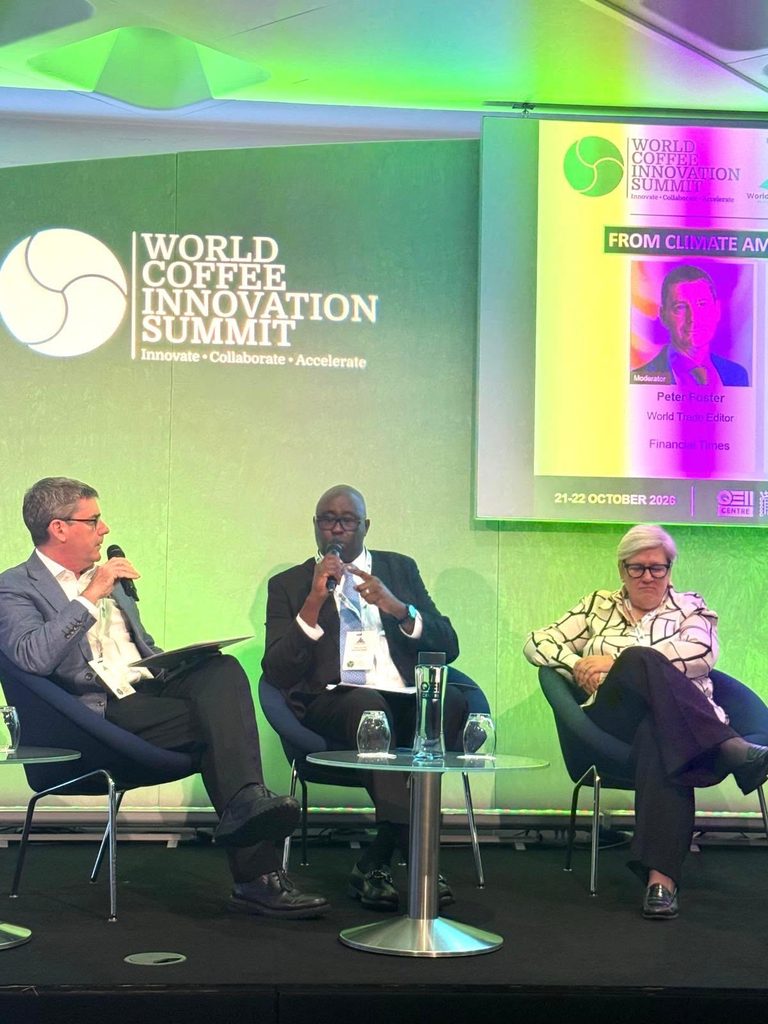
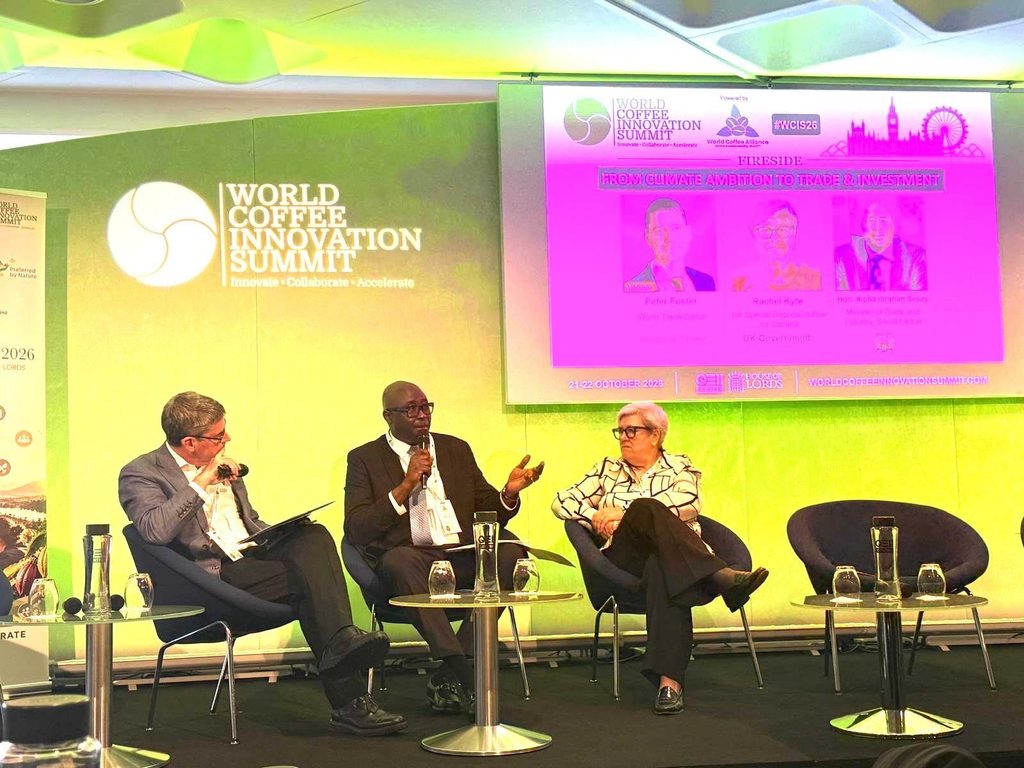
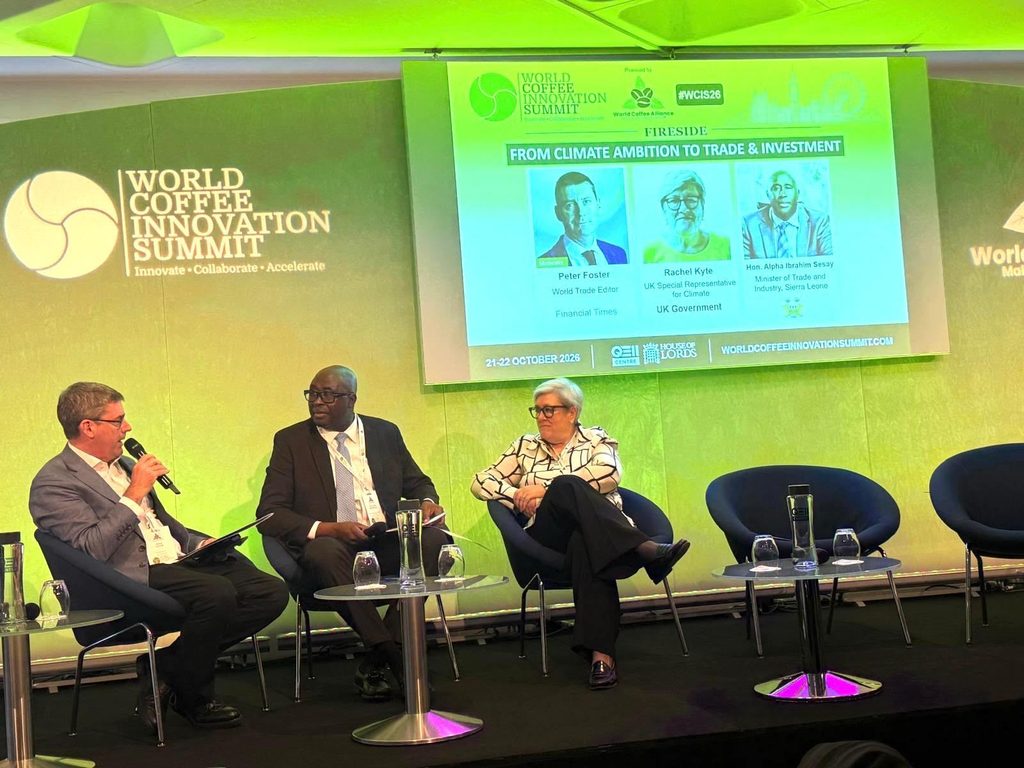
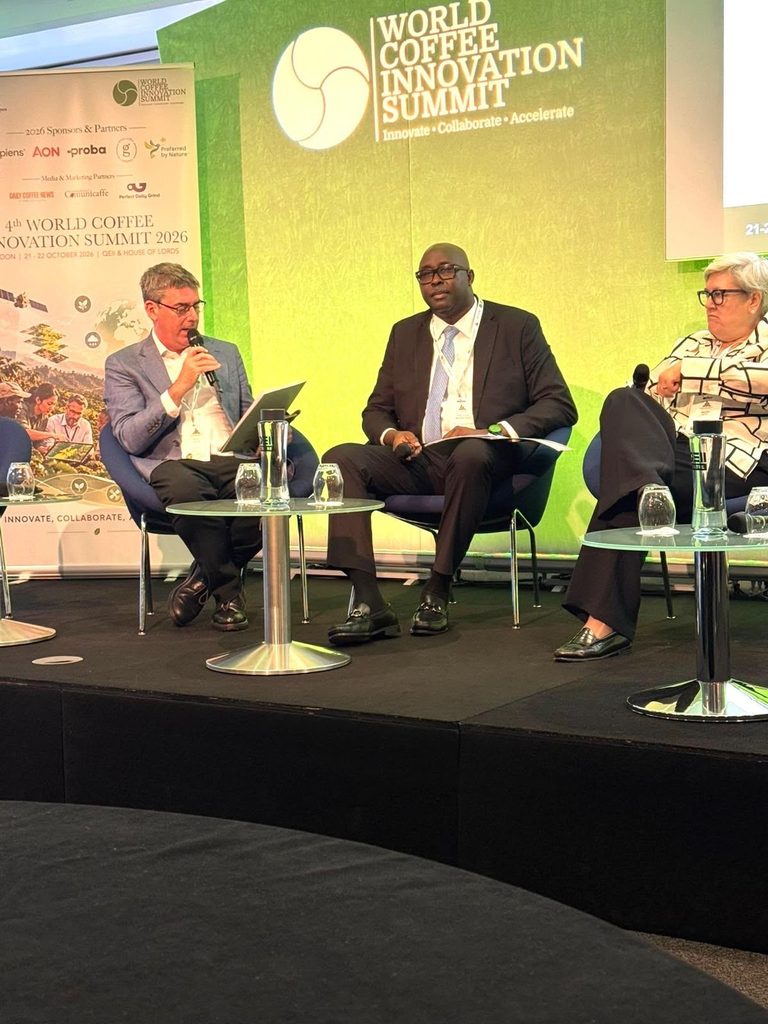
The Minister joined *Rachel Kyte, the United Kingdom’s Special Representative for Climate*, for a high-level fireside discussion titled “*From Climate Ambition to Trade & Investment*,” chaired by *Peter Foster*, World Trade Editor of the Financial Times.
The discussion focused on a critical challenge for developing *producer nations*: how to attract investment, strengthen productivity and ensure that farmers and national economies *capture a greater share of the value generated from their commodities* while confronting growing climate pressures.
Minister Sesay said achieving this would require *stronger partnerships* among governments, the private sector, financial institutions, producer countries and the major markets where commodities are ultimately processed and consumed.
“*The biggest companies are making profits, but most of that profit is at the value-addition stage, not at the production stage*,” he said, stressing that partnerships between producing and manufacturing countries must be *fair, transparent* and work for developing economies.
He said Sierra Leone was deliberately *encouraging domestic processing through concessions and tax incentives*, rather than remaining principally an exporter of raw agricultural commodities.
“*Across all the resources we have, we are promoting beneficiation,*” Minister Sesay explained. “*In the past, we exported 100 per cent of our cocoa and coffee beans. Today, we are beginning to transform some of that production locally, including into cocoa powder, paste and local chocolate.*”
He also highlighted Sierra Leone’s access to wider regional and continental markets through *the African Continental Free Trade Area (AfCFTA)*, presenting the country as a potential base from which investors could serve *markets beyond its borders*.
The Minister stressed that climate adaptation must go hand in hand with *research, innovation and increased productivity*, warning that failure to act now could prove considerably more costly in the future.
“*In the next 15 to 20 years, if we do not improve our varieties, invest in research and protect the environment, we will be forced to pay many times more and for poorer quality*,” he warned.
*Rachel Kyte* similarly argued that the future of the global coffee industry ultimately depends upon *the survival and prosperity of those at the beginning of its value chain*.
“*The fate of the smallholder in Sierra Leone is the fate of your brand*,” she said, arguing that *sustainability and resilience* should not be treated merely as corporate obligations, but as *fundamental to securing future supply*.
She also highlighted *constraints* imposed on developing countries by the international financial architecture, including *high borrowing costs and debt pressures that limit governments’ ability to invest in agriculture*, climate resilience and economic development.
The discussion was particularly significant against the backdrop of the economics of the global coffee industry. Global coffee production exceeds 11 million tonnes annually, while the wider *industry generates more than US$200 billion in annual revenues*. Africa remains an important producer, yet much of its coffee leaves the continent before the more lucrative stages of processing, roasting, packaging, branding and retail.
For Africa, therefore, the *challenge is not simply to grow more coffee, but to earn more from the coffee it already grows*.
For Sierra Leone, the opportunity carries an additional dimension. The country’s coffee heritage includes *Coffea stenophylla*, the rare species historically associated with Sierra Leone that has attracted international scientific attention for its *desirable flavour characteristics and tolerance of higher temperatures*.
As climate change threatens established coffee-growing regions, such characteristics could potentially position Sierra Leone within the international search for more climate-resilient coffee varieties.
Minister Sesay, however, emphasised that solutions must reflect individual national circumstances.
“*Solutions have to be contextual, conceived and developed collaboratively,*” he said. “*What works for Brazil or China will not necessarily work for Sierra Leone*.”
He linked Sierra Leone’s participation to the Government’s broader national development agenda, including *Feed Salone, economic diversification, increased agricultural production, job creation and environmental protection*.
With *WCIS26* now concluded, Sierra Leone’s message from London was clear: *an origin country should not merely be where the coffee journey begins. It should increasingly be where more value is created, more investment is retained and more of its people benefit from the global industry*.
Abdulai M. Braima
Information Attaché